
Bimbisara-jail is King Bimbis Arra (Sanskrit: , Bimbis Arra, 558 BCE-491 BCE), the fifth king of the Zalli Dynasty (544 BCE-491 BCE), founder of Wang Shecheng (now Rajgir in Bihar, India), and a great patron of the Buddha.

The Buddha Sutra records that he buried his seven treasures in a secret underground of the king’s house, the capital of the Mahjong Kingdom, and entrusted them to the prince of Imam.
Aja Tataru — 461 BCE), son of King Bimbis Arra and Queen Vetti.
The Bimbisara Jail, also known as Bimbisara’s Jail, is a historical site located in Rajgir, Bihar, India. It is associated with King Bimbisara, who was one of the early rulers of the Magadha region and a contemporary of Lord Buddha.
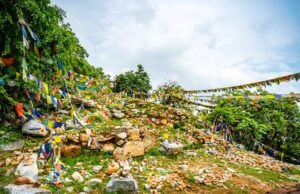
Located at the base of Gridhakuta Hill (Vulture’s Peak), the jail offers views of the Japanese Peace Pagoda and is significant as the site where Bimbisara spent his final days, relocated to a room where he could see Lord Buddha. The site features ancient stone pillars and walls, forming a historical attraction within the larger complex of Ajatshatru Fort in bimbisara-jail .

According to Buddhist texts and historical accounts, King Bimbisara was imprisoned in this jail by his son, Ajatashatru, who usurped the throne. Ajatashatru was King Bimbisara’s own son from a different queen and had a complicated relationship with his father.
The story goes that Ajatashatru, who had become king, asked his father to choose a place for his imprisonment, and Bimbisara chose a spot where he could see and hear Lord Buddha, who was staying in the fort at the time.

The exact reasons for Bimbisara’s imprisonment vary in different accounts, but it is generally believed to have been a power struggle within the royal family.
The Bimbisara cave refers to the Son Bhandar caves, a pair of rock-cut chambers in Rajgir, Bihar, believed to hold the hidden treasure of King Bimbisara. Legend says that the cave’s walls contain a secret passage to the treasure, marked by an undeciphered inscription next to a doorway-like carving. Numerous attempts to open the passage, including by British forces, have failed, leaving the treasure and the secret word a mystery.

The jail is surrounded by high walls and stone pillars, and it offers a stunning view of the Gridhakutta Hill and the Japanese Peace Pagoda. Today, it’s a popular tourist attraction and a significant historical site, especially for those interested in Buddhism and Indian history.

The caves are also known as Swarna Bhandar or Bimbisara treasury cave.